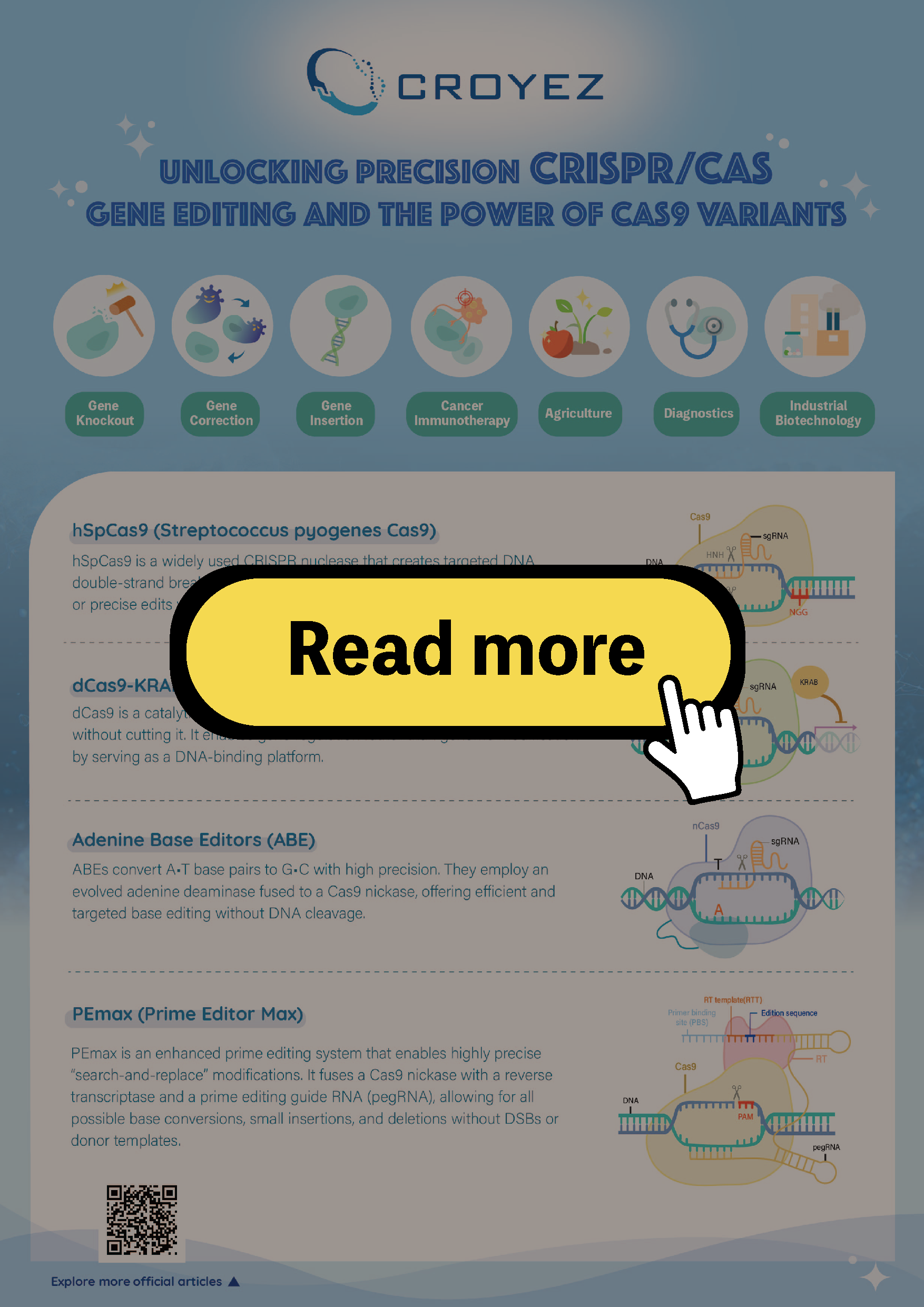


Unlocking Precision CRISPR/Cas Gene Editing and the Power of Cas9 Variants
2025-04-14
CRISPR/Cas9 Gene Editing Mechanism
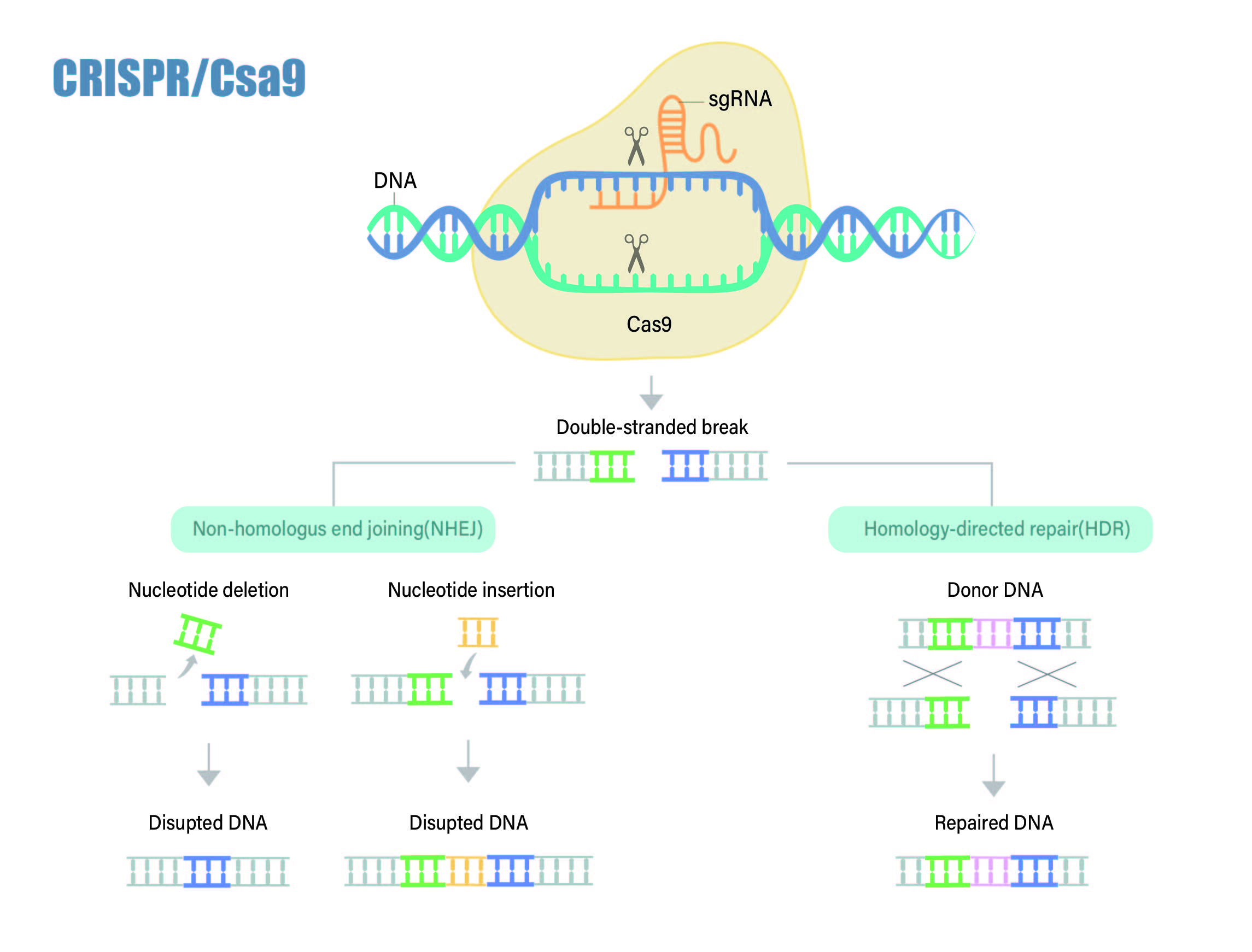
CRISPR (Clustered Regularly Interspaced Short Palindromic Repeats) is a revolutionary gene editing technology inspired by the adaptive immune system of bacteria. In nature, bacteria use CRISPR to store fragments of viral DNA, enabling them to recognize and defend against future infections.In gene editing applications, the CRISPR system employs a guide RNA (gRNA) that is specifically designed to be complementary to a target DNA sequence within the genome. This gRNA directs the Cas9 protein—often referred to as “molecular scissors”—to the precise location in the DNA.
Upon recognizing a short sequence known as the protospacer adjacent motif (PAM), Cas9 binds to the DNA and introduces a double-strand break (DSB) at the target site. The cell then activates its natural DNA repair mechanisms, primarily through one of two pathways:
- Non-Homologous End Joining (NHEJ): An error-prone repair process that can introduce insertions or deletions (indels), often disrupting the gene and resulting in a functional knockout.
- Homology-Directed Repair (HDR): A more precise repair pathway that requires a donor DNA template. This allows accurate insertion, replacement, or correction of genetic sequences.
Applications of CRISPR Technology
CRISPR technology has revolutionized gene editing with its wide-ranging applications in both research and clinical development. Key applications include: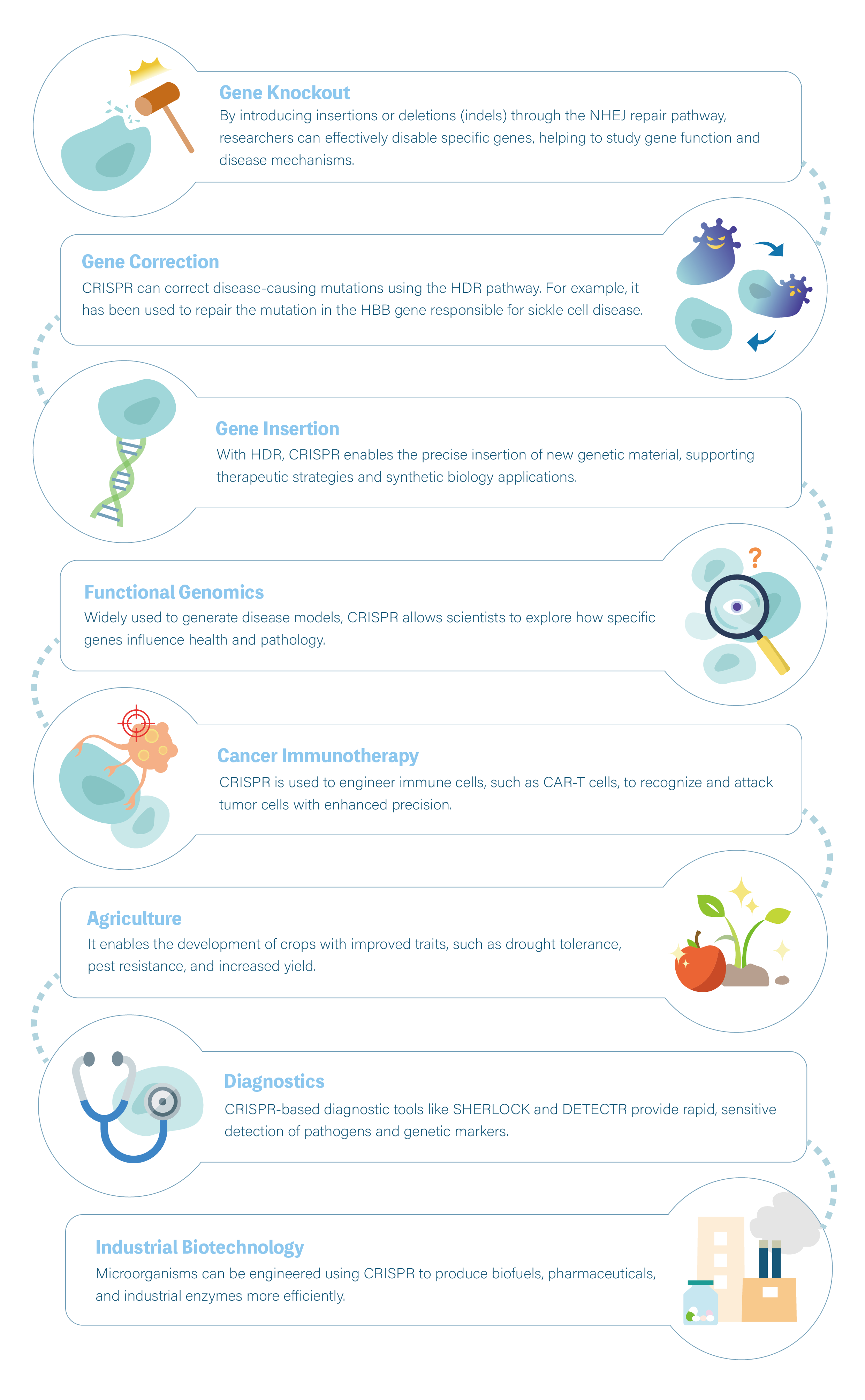
Advantages of CRISPR Technology
Compared to earlier gene-editing tools like ZFNs and TALENs, CRISPR/Cas offers several critical advantages, making it the platform of choice in modern molecular biology: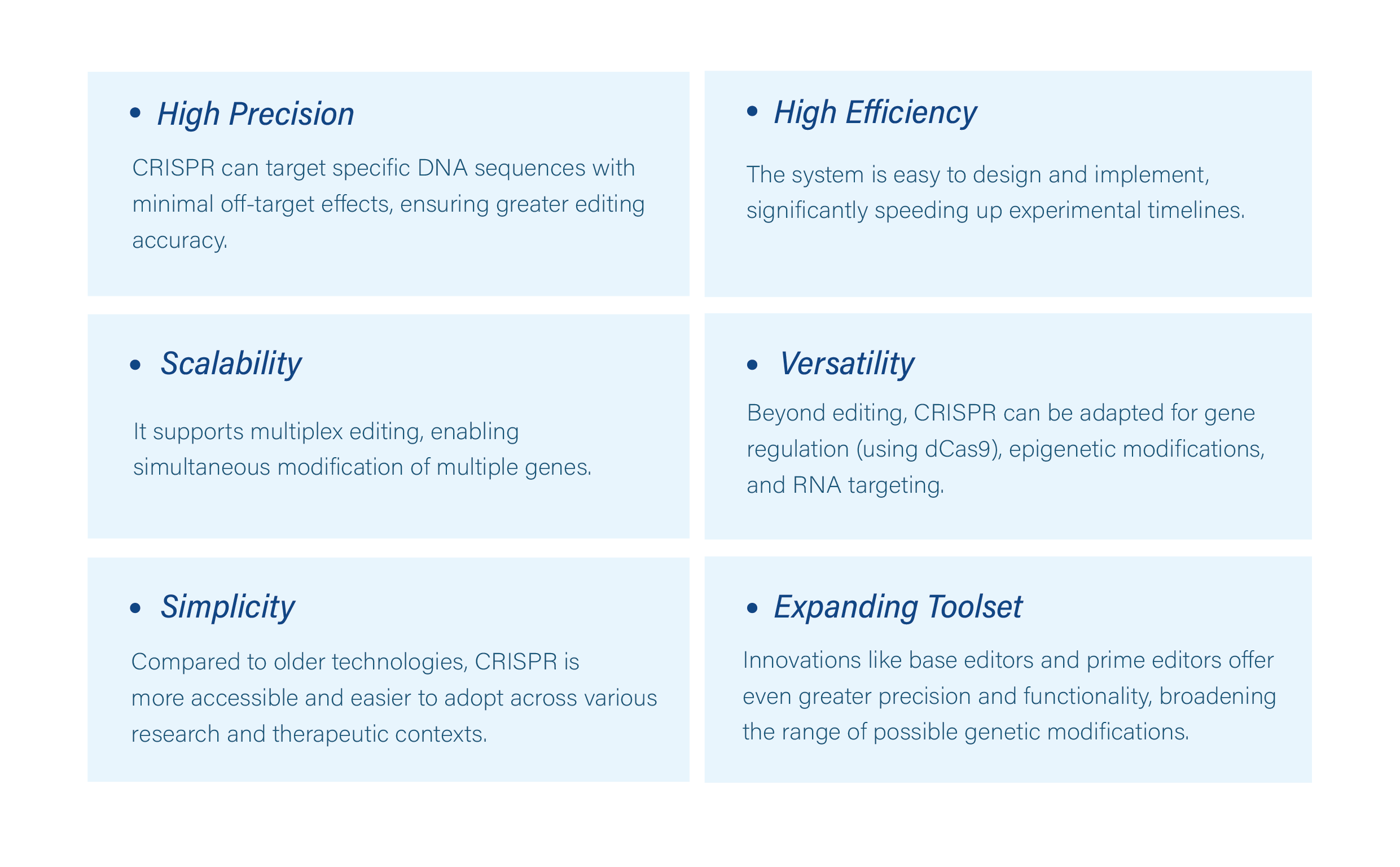
PRODUCTS:
- All Gene Editing mRNA ➡︎

ARTICLE:
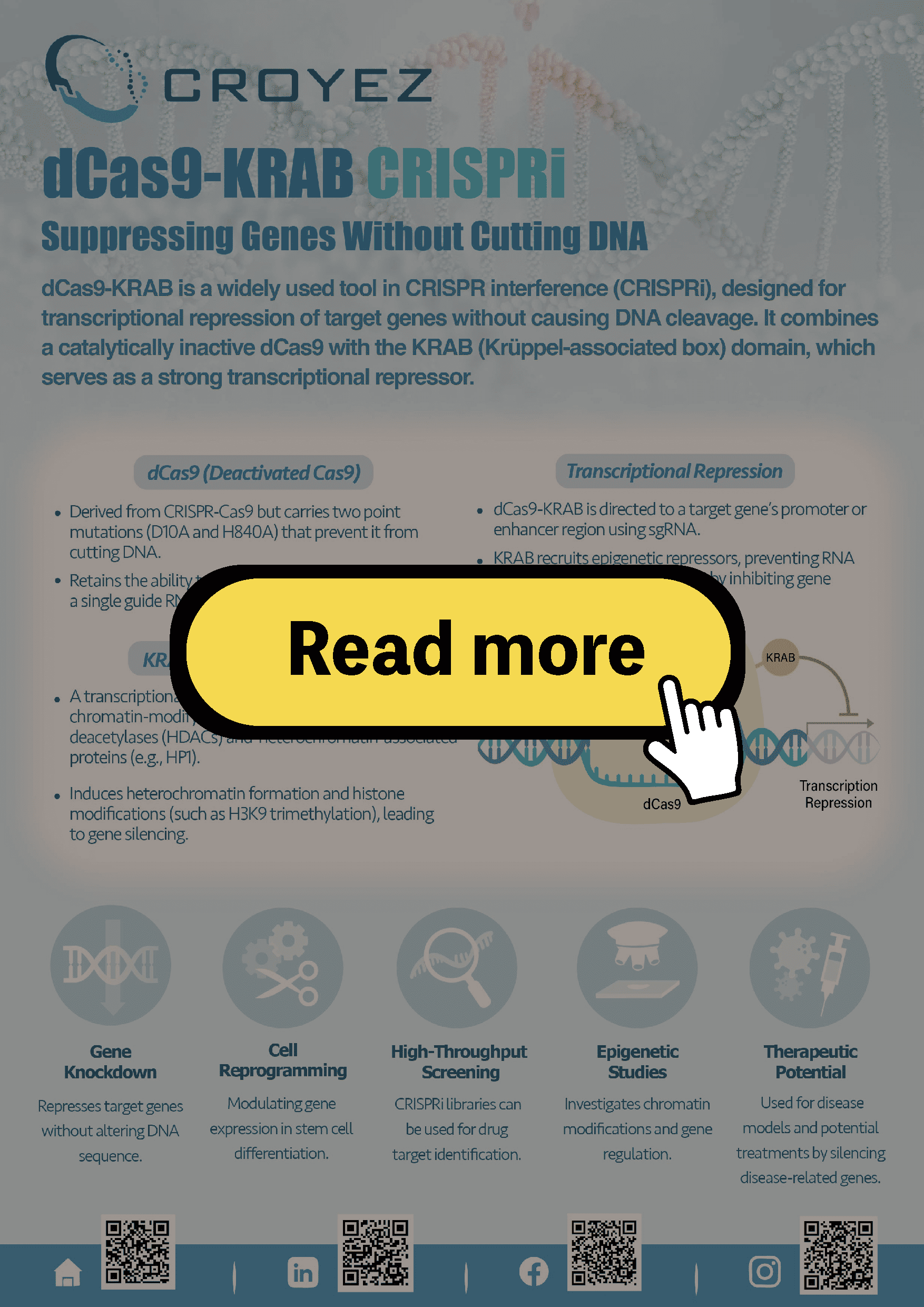
- The Power of Cas9 Variants (All Gene Editing Tools) ➡︎

Overview of CRISPR Tools: SpCas9, Cas12a, dCas9-KRAB, dCas9 Activator, CBE, ABE, and PEmax The CRISPR technology landscape has evolved significantly, introducing various tools for precise genome editing and regulation. Here’s a detailed overview of some key components.
- Pioneering Precision with ABEmax Technology ➡︎
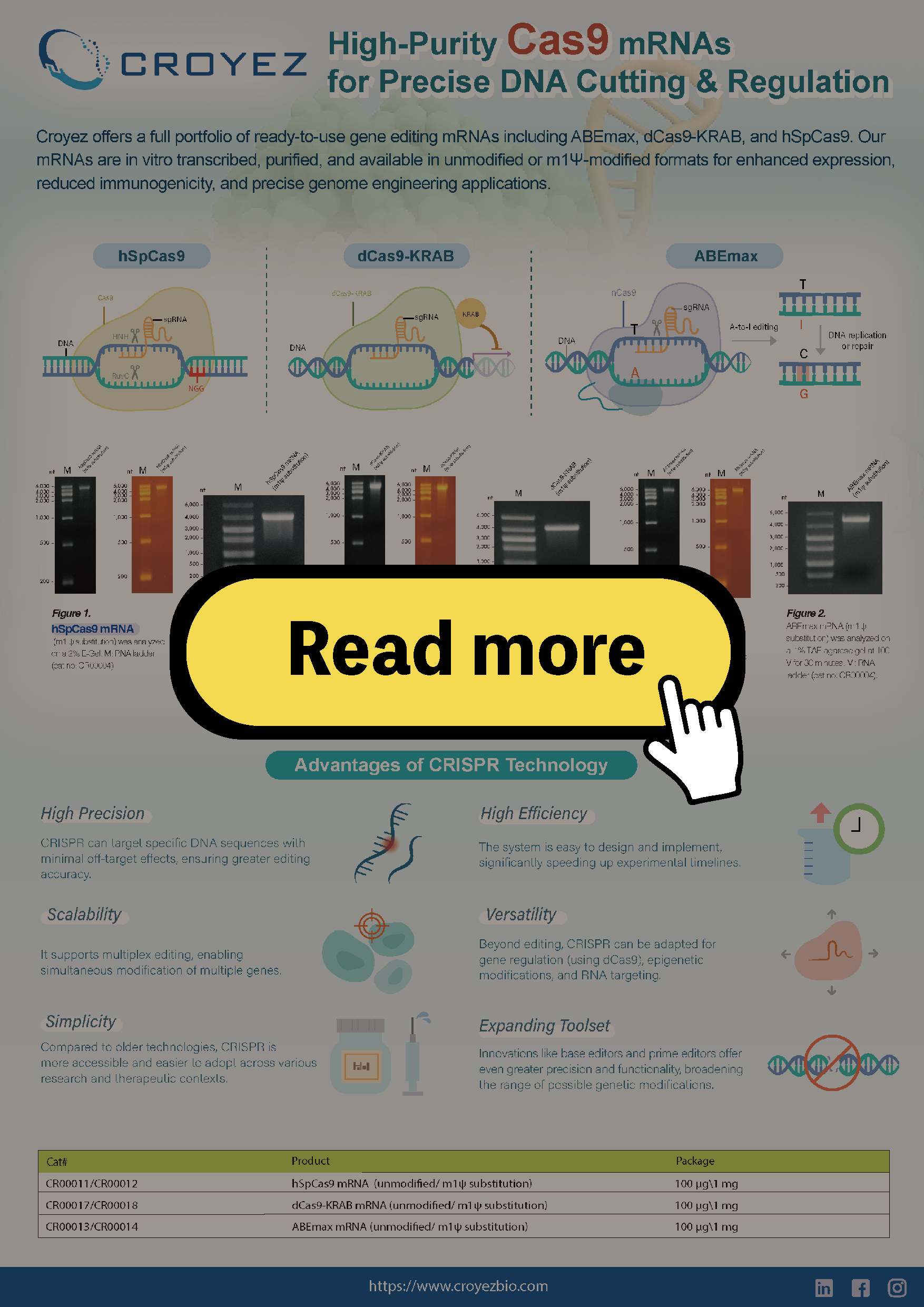
Overview of ABEmax Technology: Precision A-to-G Editing Without DNA Breaks ABEmax offers a powerful solution for single-base correction using a Cas9 nickase fused with TadA variants. Ideal for research into genetic diseases, ABEmax enables safe and precise genome editing with minimal off-target effects.
Other related academic articles: